
Roblox recently announced the introduction of a new AI chat, designed to keep the game fluid while maintaining the chat civilization. Roblox has also significantly enhanced the Platform ‘ s existing auditing tools to improve its ability to detect information about violations or attempts to circumvent community guidelines. The current AI system will no longer completely shield the violation information, but will recast the filtered text into a more friendly vocabulary while retaining the original semantic. For example, in previous systems, like “Hurry tf up” will be directly shielded to “####” and will now be automatically rewritten by AI to “Hurry up”. Thus, the lack of semantics due to the text shield is avoided and communication is guaranteed.
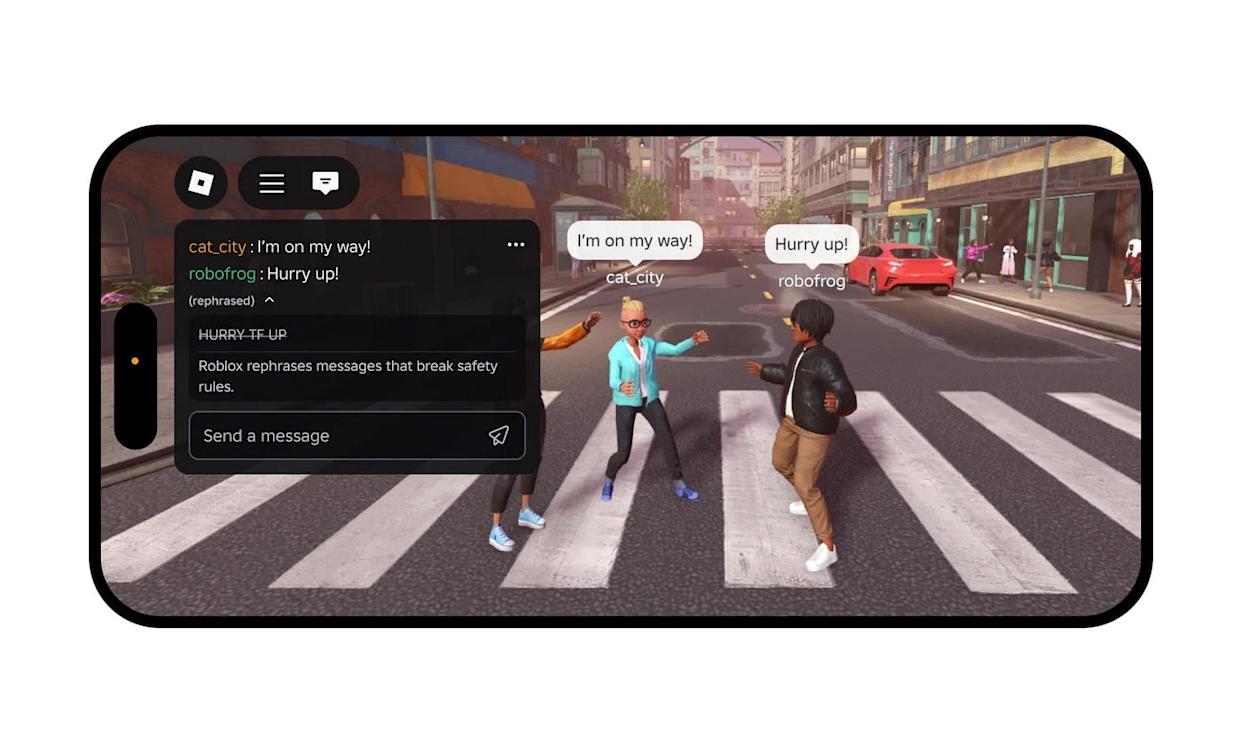
Roblox users and Vice President Rajiv Badia of Discovery said: “Charlie is at the heart of players’ contacts, coordination and play on Roblox. A real-time rewrite helps keep the game and the dialogue smooth and leads to a more civilized language. This will reduce friction in the conversation while maintaining the norm of helping communities to remain civilized.” When the message triggers Roblox’s swearing policy, everyone in the conversation is informed that the text will be rewrited to keep civilized communication. The multi-layered security system of Roblox is still working for worse terms. This function is currently only available for communication in age-tested similar-age user games and supports all languages currently supported by the Roblox Autotranslation Tool.

In May 2025, Roblox introduced an active real-time warning function to help users understand the Roblox policy while warning them about language. In last year ‘ s experiment, Roblox found that the publication of game channel circulars and mandatory suspensions had reduced filtered chat messages by 5 per cent and penalties for abuse by 6 per cent. Roblox has also made significant improvements to its text-filtration system to detect more variants that violate community norms. Early test results showed significant improvements in the detection of leet (similar numbers or symbols instead of letters, such as E-3) and more sophisticated attempts to bypass filters. This reduced by 20 times the risk and underreporting rate of requests for personal information (such as social accounts or telephone numbers).