
Anthropic, an artificial intelligence company, announced a cooperation agreement with the official Google Thursday, a multi-billion-dollar deal that would be the largest TPU purchase commitment in Google history, with an ATM capacity expected to be available to Anthropic in 2026.
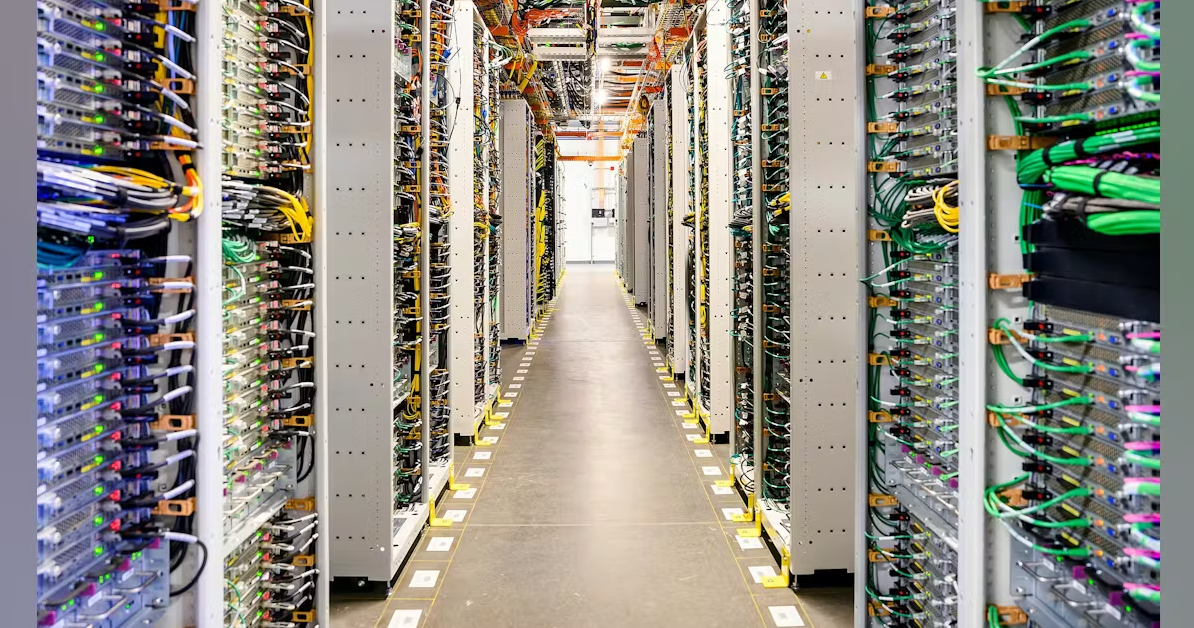
According to industry estimates, approximately $50 billion would be required for the construction of a gigabytes-grade data centre, of which chips account for about $35 billion. Despite more ambitious planning by competitors — such as OpenAI’s 33 gigawatt “Stargate” project — Anthropic is more focused on practical implementation than public opinion. Anthropic, created by a former OpenAI researcher, has always been a cautious development concept, with cloudy structures at the heart of its infrastructure strategy. The Claude Large Model family operates on three main platforms, Google TPU, Amazon Trainium Chip and British Wynda GPU, each with specific tasks such as training, reasoning and research. Google claims that its TPU provides Anthropic with “excellent value for money and energy efficiency”.
In his bulletin, Krishna Rao, Chief Finance Officer of Anthropic, stated: “This cooperation will help us to continue to expand the calculus scale needed to define the AC frontier.” According to relevant sources, this cloudy structure has resulted in significantly more efficient inputs per dollar than a single-supplier model. The surge in computing demand was backed by explosive business growth: corporate annualization had approached $7 billion, and service-business clients exceeded 300,000, a 300-fold increase over the past two years. The number of large clients contributing more than $100,000 in annualized income has increased nearly sevenfold over the past year. Its smart programming assistant, Claude Code, has been on line for only two months to achieve $500 million in annualized income, which the company calls “the fastest-growing product in history”. Although Google contributed to the next stage of the expansion of Anthropic, the Amazon remains its deepest partner. Currently, the Amazon has invested $8 billion in cumulatively, well above the $3 billion publicly recognized in Google. More critically, the “Rainier Plan” supercomputer customized by AWS for Claude uses self-study Trainium 2 chips, not only to increase speed but also to optimize cost significantly.
The real impact has been observed on Wall Street: Rothschild & Co Redburn Analyst Alex Hessel estimates that Anthropic contributed 1-2 points of growth to AWS in the fourth quarter of last year and the first quarter of this year, a figure that is expected to exceed 5 percentage points in the second half of 2025. Wedbush analyst Scott DeWitt pointed out that once Claude became a default tool for business developers, its use would be directly translated into AWS revenue, an effect that could continue “for decades”. It is noteworthy that in the recent AWS service interruption, Anthropic relied on the cloudy architecture to ensure that Claude ‘ s services were not affected. The company remains neutral and strictly controls model weights, pricing strategies and customer data, and does not enter into exclusive agreements with any cloud service providers. This flexibility may be a key competitive advantage in the context of super-massive cloud service providers ‘ competition.